
Key Points :-
-
Migraine – Introduction
-
Cause of Migraine
-
Symptoms of Migraine
-
Diagnosis of Migraine
-
Migraine – Ayurveda Perspective
Migraine: – Introduction
Migraine is a headache occurring mostly in half of the head. In migraine the pain is of throbbing type of pain which is quite severe, that patient gets distracted from the routine work. Migraine is an episodic disease. The symptoms appear for a few days in a week or a month and lasts for few hours to four days. The headache triggers with multiple causes. Cure of disease with ayurveda treatment is possible with positive changes in lifestyle and diet, many effective medicines are available in Ayurveda to overcome the disturbing headache.
Causes of Migraine
Exact cause of migraine is still unknown. There are some factors which triggers migraine. These factors varies person to person
- Hormonal changes during menstruation
- Exposure to bright light e.g.: – long screen time
- Food like coffee, tea, alcohol, chocolates
- Irregular food habits
- Lack of sleep
- Low blood pressure
- Fasting
Symptoms of Migraine
The presenting symptoms is headache most of the time on either side of the head. The pain is throbbing in nature. There can be generalized headache in some cases.
Along with headache patients may experience following symptoms.
- Constipation
- Visual disturbances
- Sensitivity to light
- Neck stiffness
- Food craving
- Yawning
- Mentally stressed out
These symptoms are experienced in episodes of few hours to few days. Then symptoms subside at their own or with medication.
After a few days or weeks, symptoms reappear.
Diagnosis of Migraine
Migraine is diagnosed clinically by physician. The typical pattern of headache along with associated symptoms leads to diagnosis. Migraine improve symptomatically with analgesics, if analgesics gets poor response, CT scan or MRI of the brain may be carried out t rule out any other underlying pathology.
Migraine Ayurveda Perspective
In Ayurveda text, Charak Samhita and Madhava Nidanam explains 11 types of ‘Shiroroga’ meaning disease occurring at head. All are having one common symptom ‘Shirahshool’ means headache.
Out of these 11 Shiroroga one is ‘Ardhavabhedaka’ which has a cardinal sign as headache in half of the portion of the head. This Ardhavabhedaka typically correlates with Migraine in its etiology and symptoms.
Etiology – Causes of Ardhavabhedaka
- Dry food
- Overeating
- Taking food prior to digestion of previous food
- Holding natural urges like urine stool, etc
- Over exertion
- Over exercise
Pathophyphysiology
The cause mentioned above vitiates Vata Dosha along with Kapha Dosha. This vitiated vata gets settle in head and creates symptoms like headache in either half, pain in neck, eyebrows, temporal region, ear, and eyes. The episode repeat after 10, 15 or 30 days.
Treatment of Ardhavabhedaka
Ardhavabhedaka is treated with Panchakarma therapies and medicinal therapies both. Yoga is also beneficial in the case of Migraine.

Shirovirechana or Nasya– meaning nasal instillation swedana – steam treatment, Anuvasana Basti – Oil Enema are the fruitful treatments available in Ardhavabhedaka – Migraine cases.
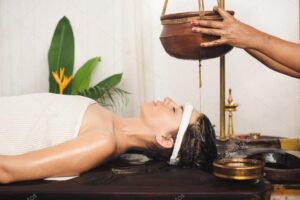
Shirodhara & ShiroBasti are also found useful in Migraine cases.
Medicinal Treatment
Medicinal treatment is designed by focusing on the cause of Ardhavabhedaka. if the cause is constipation, advising laxatives gives good results. If the cause is mental stress, then giving ‘Herbal Anxiolytics’ is the ideal treatment of migraine.
Some combinations like shirahshooladi Vajra Rasa, Triphala Guggul are prescribed to give symptomatic relief from headache.
Yoga therapies for Migraine
Some yoga practices are found effective in Migraine Those: –
- Paschimottanasana
- Adhomukha Shwanasana
- Shashankasana
- Anulom – Vilom
- Ujjayi Pranayama
- Bhramari Pranayama
- Antarmouna
- Meditation
_______________________________________________________________________________
Benefits of Ayurvedic Treatment
✅ Natural and Gentle Healing: It uses herbs, oils, massages, and therapies like Nasya (nasal drops) and Shirodhara (oil dripping on the forehead), which are non-invasive and natural.
✅Treats the Root Cause, Not Just Symptoms: Ayurveda focuses on correcting the underlying imbalance in the body (like digestion issues, stress, or poor lifestyle), not just giving quick pain relief.
✅ Customised for Your Body Type: Ayurveda understands that every person is different. So the treatment is personalized, based on your body type (dosha) and lifestyle.
✅ Helps Prevent Recurrence: With proper diet, lifestyle advice, and yoga practices, Ayurveda not only treats migraine episodes but also helps prevent them from coming back.
✅ Improves Overall Wellness: Beyond migraine, Ayurveda improves digestion, sleep, mental peace, and immunity—helping your whole body feel balanced and healthy.
_______________________________________________________________________________
Conclusion
Migraines are painful headaches that often affect one side of the head and come with other symptoms like light sensitivity, stress, or stomach issues. Ayurveda sees it as “Ardhavabhedaka” and treats it by balancing the body’s energies using therapies like Panchakarma, herbal medicines, and yoga. By changing diet, lifestyle, and managing stress, migraine symptoms can be reduced naturally. With consistent Ayurvedic care, many people find lasting relief.