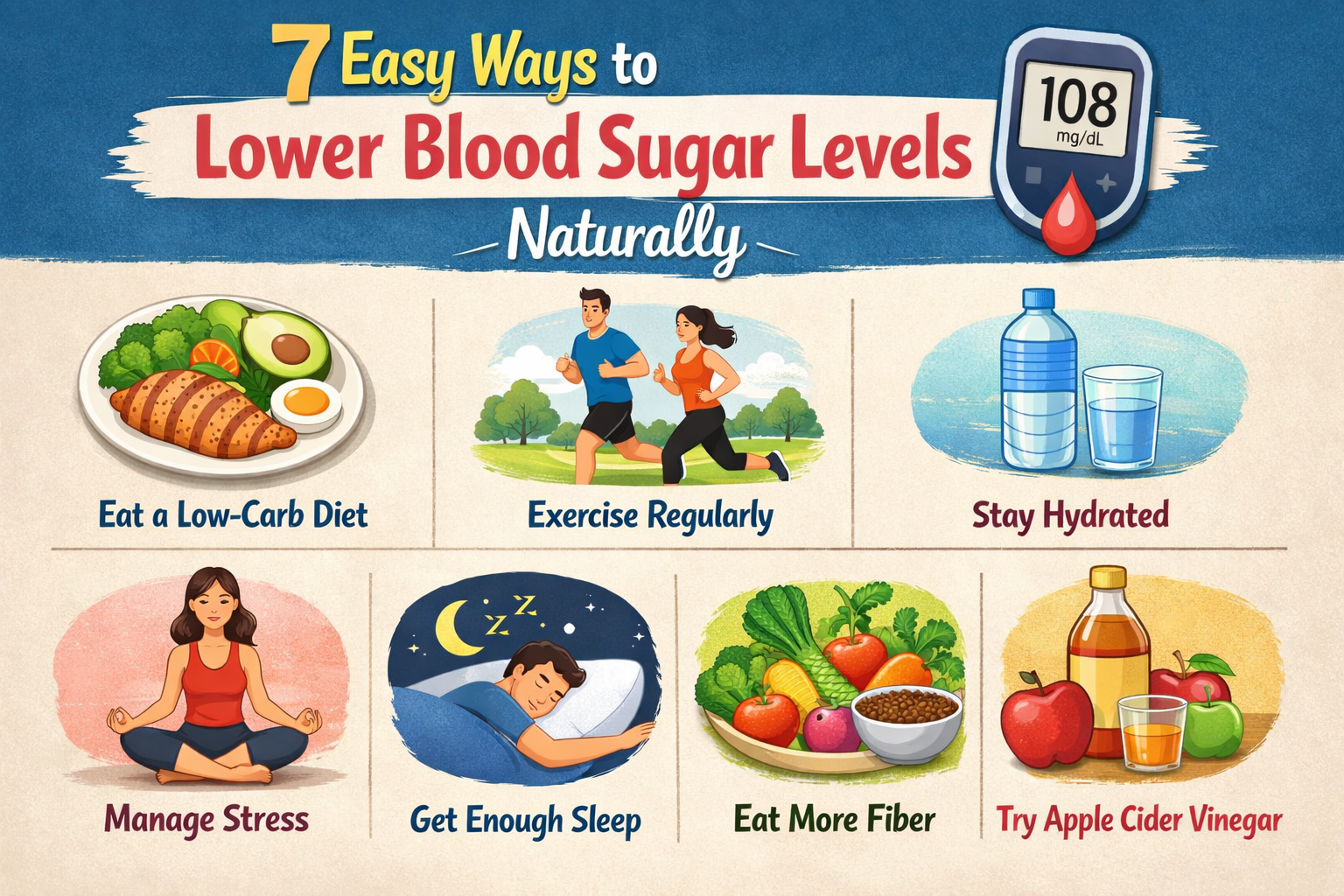
Introduction
Diabetes is not just a disease — it’s a lifestyle disorder. In today’s busy world, factors like poor eating habits, sedentary lifestyle, overweight, and stress are major contributors to high blood sugar levels. When our body can’t properly use insulin, sugar builds up in the bloodstream, leading to fatigue, frequent urination, and other symptoms of high blood sugar.
But the good news is — with small lifestyle and dietary changes, you can naturally lower blood sugar and prevent long-term complications. Let’s explore 7 effective ways to do it.
1. Maintain a Healthy Weight
Keeping your body weight in the normal range is one of the most effective ways to lower blood sugar.
Excess fat, especially around the belly, makes it harder for insulin to control glucose.

You can check your BMI (Body Mass Index) using this formula:
BMI = weight (kg) / [height in meter]²
- Healthy BMI: 5–24.9
- Overweight: 25–29.9
- Obese: 30 or higher
If you are overweight, aim for gradual weight loss through a balanced diet and regular activity. Even a 5–10% weight reduction can help normalize blood sugar levels.
Managing blood sugar doesn’t have to be confusing.
Get expert guidance and a personalized natural care plan.
👉 Book your appointment today and take the first step towards better health.
2. Choose Low Glycemic Foods
The glycemic index (GI) measures how quickly foods raise your blood glucose levels.

Low GI foods help maintain steady energy and prevent sugar spikes.
Examples of low GI foods:
- Whole grains: oats, barley, brown rice
- Legumes: lentils, chickpeas, kidney beans
- Fruits: apples, oranges, berries, guava
- Vegetables: spinach, broccoli, carrots
- Nuts and seeds: almonds, chia seeds
These foods that lower blood sugar are rich in fiber and nutrients that support stable glucose levels.
3. Manage Carbohydrate Intake
Carbohydrates directly affect blood sugar, but you don’t need to eliminate them completely. Focus on balanced meals containing protein, fiber, and healthy fats.
Tips to manage carbs:
- Replace white bread and sugar with whole grains and fruits.
- Combine carbs with proteins (like dal + brown rice)
- Avoid sugary snacks, sodas, and refined flour.
This approach helps your body digest food slowly, avoiding sudden spikes in high glucose levels.
If you found these tips helpful, don’t stop here. Read our next blog on Best Ayurvedic Food & Medicine for Acidity Relief.
4. Stay Hydrated
Water plays a vital role in flushing excess sugar through urine. Low water intake can increase the load on kidneys and lead to dehydration.

How much water to drink?
Aim for 8–10 glasses a day.
You can also include herbal teas, coconut water, or lemon water (without sugar).
Avoid sugary beverages like cola, packaged juices, and energy drinks as they raise blood sugar instantly.
5. Exercise Regularly
Physical activity helps your muscles use glucose efficiently and improves insulin sensitivity.

You don’t have to do intense workouts — even simple exercises can help reduce high blood sugar symptoms.
Best exercises for diabetes:
- Brisk walking for 30 mins daily
- Cycling or swimming
- Yoga (Surya Namaskar, Pranayama)
- Light strength training
Consistency is key — make exercise a daily habit.
6. Stay Active Throughout the Day
Even if you exercise, long hours of sitting can still raise blood sugar levels.

Try to keep your body active throughout the day.
Simple ways to stay active:
- Take short walking breaks every 30–45 minutes
- Use stairs instead of lifts
- Do stretching during work breaks
- Walk after meals for 10–15 minutes
An active daily routine burns extra glucose and keeps your metabolism healthy.
7. Manage Stress
Stress triggers hormones like cortisol and adrenaline, which increase blood glucose levels.

Learning to manage stress can prevent sudden spikes in sugar levels.
Effective stress management techniques:
- Meditation and mindfulness
- Deep breathing exercises
- Listening to soothing music
- Spending time with loved ones
- Getting enough sleep (7–8 hours)
Remember — a calm mind helps maintain a healthy body.
Conclusion
Balancing blood sugar levels doesn’t require strict diets or heavy medication — it starts with mindful living.
By maintaining a healthy weight, eating low glycemic foods, managing carbs, drinking enough water, exercising daily, staying active, and reducing stress, you can naturally lower blood sugar and live a healthier life.
If you often experience signs of high blood sugar such as fatigue, thirst, or frequent urination, consult a doctor or consider Ayurvedic lifestyle support for holistic diabetes management.